
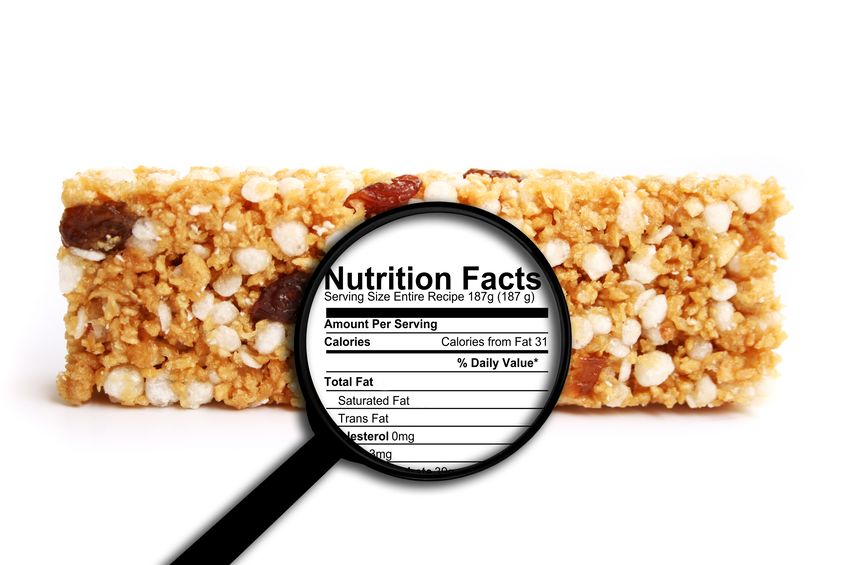
 Many people avoid looking at nutrition labels because it seems overwhelming at first. The problem with not understanding a nutrition label means unknowingly putting things into your body without realizing the consequences of consuming mysterious ingredients. Understanding the blueprints of a nutrition label was never taught in school, luckily the information that follows will highlight the most important aspects that these unfamiliar labels have to offer.
The first most important thing to understand is serving size, which is usually located at the top left of the label. If a serving size is 12 crackers with 120 calories per serving size, but there are 60 crackers in the box, eating the whole box means consuming a whopping 600 calories! Knowing exactly how much you are eating can better help you understand where to fit your snacks in during the day and how much to eat of what. That box of crackers just replaced an entire meal that could have been something else with more substantial nutrition.
Near the bottom of the label lists all the ingredients that are found within the product. The first ingredient listed is the main ingredient, meaning that most of the product is made up of that ingredient. If the first ingredient is cane sugar and the last ingredient is apple juice, that means that there is far more sugar than there is fruit juice. What many people also trip up on is the pronunciation of certain words found in this list. Usually these words are long scientific words that are often confusing. In order to breakdown what these words mean, it is important to understand prefixes and suffixes, as prefixes and suffixes determine the origin of each ingredient. For example, if an ingredient starts with “lact-” that means that it is a derivative of milk, meaning someone with a dairy intolerance would not be able to consume that product. The suffix “-ose” found in the words glucose, fructose, and lactose, means “sugar.” This understanding is also useful when reading cosmetic products, as the suffix “-cone” means a variation of silicone, which has been a recent infamous ingredient to avoid in shampoos and conditioners.
The next most important thing to understand in a nutrition label is grams of sugar, and how much is too much! According to Healthline, the recommended amount of sugar to consume a day is 37.5 grams for males and 25 grams for females. The average person consumes 76.7 grams of sugar a day, which is equal to 19 teaspoons and 306 calories (Healthline). To put these numbers into perspective, a bottle of sweet tea contains 44 grams, a can of soda contains 39 grams, and an energy drink contains 27 grams of sugar. If you want to stay inside your daily limit of sugar, opt for drinks with a lower amount of sugar per serving (less than 10) or only indulge in a couple of sips of soda or tea!
Stay tuned for Part 2 where we discuss sodium levels, different types of fat, and carbohydrates!
Posted by: Emily Jump, Marketing and Communications Intern





Comments are closed.